When a tooth cannot be saved, the most important thing is that the process is gentle, comfortable, and followed by a clear plan for what comes next. At Anderson Smile Center, we have been performing extractions with care and precision in Anderson Township since 1973.
We always try to save a tooth first. When that is not possible, we make the extraction as comfortable as possible — and help you plan what comes next.
Extraction is never our first recommendation. We always evaluate whether a tooth can be saved through a filling, crown, or root canal before recommending removal. But when a tooth is too damaged, too infected, or causing problems for surrounding teeth, extraction is the right call — and delaying it only makes things worse.
At Anderson Smile Center, we perform both simple and surgical extractions in our Anderson Township office. We use local anesthesia for every extraction, and we offer sedation for patients who need it. After the procedure, we give you clear, detailed aftercare instructions and discuss your options for replacing the tooth.
Our commitment: We do not extract teeth that can be saved. When extraction is necessary, we perform it gently, explain every step, and make sure you leave with a clear plan for recovery and tooth replacement.
The type of extraction depends on the position and condition of the tooth.
A simple extraction is performed on a tooth that is fully visible above the gum line. The tooth is loosened with a dental instrument called an elevator, then removed with forceps. Simple extractions are quick, typically 20 to 40 minutes, and require only local anesthesia.
A surgical extraction is required when a tooth is impacted, broken at the gum line, or has roots that are curved or fused to the bone. A small incision is made in the gum to access the tooth. Wisdom tooth removal is the most common type of surgical extraction.
We recommend extraction only when there is a clear clinical reason — never as a first resort.
When decay has destroyed so much of the tooth structure that a crown or root canal cannot save it, extraction is the safest option to prevent the infection from spreading.
A tooth cracked below the gum line or broken in a way that cannot be restored with a crown may need to be extracted to protect the surrounding bone and tissue.
When a tooth infection cannot be resolved with root canal therapy or antibiotics, extraction removes the source of infection and prevents it from spreading to other teeth or the jaw.
Wisdom teeth that are impacted, causing crowding, or repeatedly becoming infected need to be removed before they damage adjacent teeth or cause more serious problems.
In some cases, one or more teeth need to be removed to create space for orthodontic treatment, allowing remaining teeth to move into proper alignment.
Severe periodontal disease can destroy the bone and tissue supporting a tooth to the point where the tooth becomes loose and cannot be stabilized.
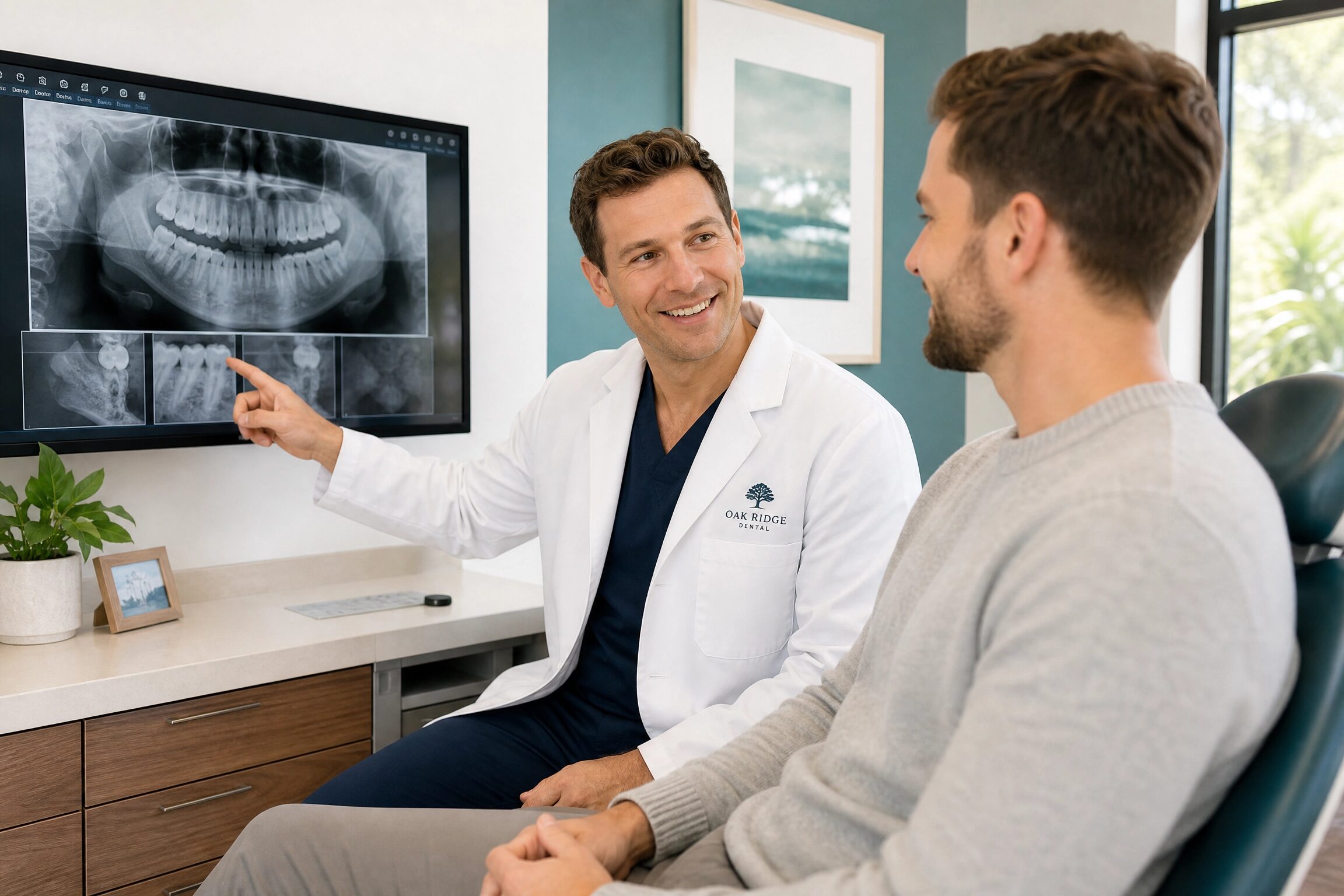
We take the time to make sure you are comfortable and informed before, during, and after your extraction. There are no surprises — we walk you through every step.
Simple, step-by-step — so you know exactly what to expect.
X-rays confirm the tooth’s position and root structure. We confirm extraction is the right choice.
Local anesthesia numbs the area completely. Sedation administered if requested.
The tooth is gently loosened and removed. You feel pressure, not pain. Simple: 20-40 min.
Gauze placed, aftercare instructions given, and tooth replacement options discussed.
Following these guidelines helps the extraction site heal properly and prevents complications like dry socket.
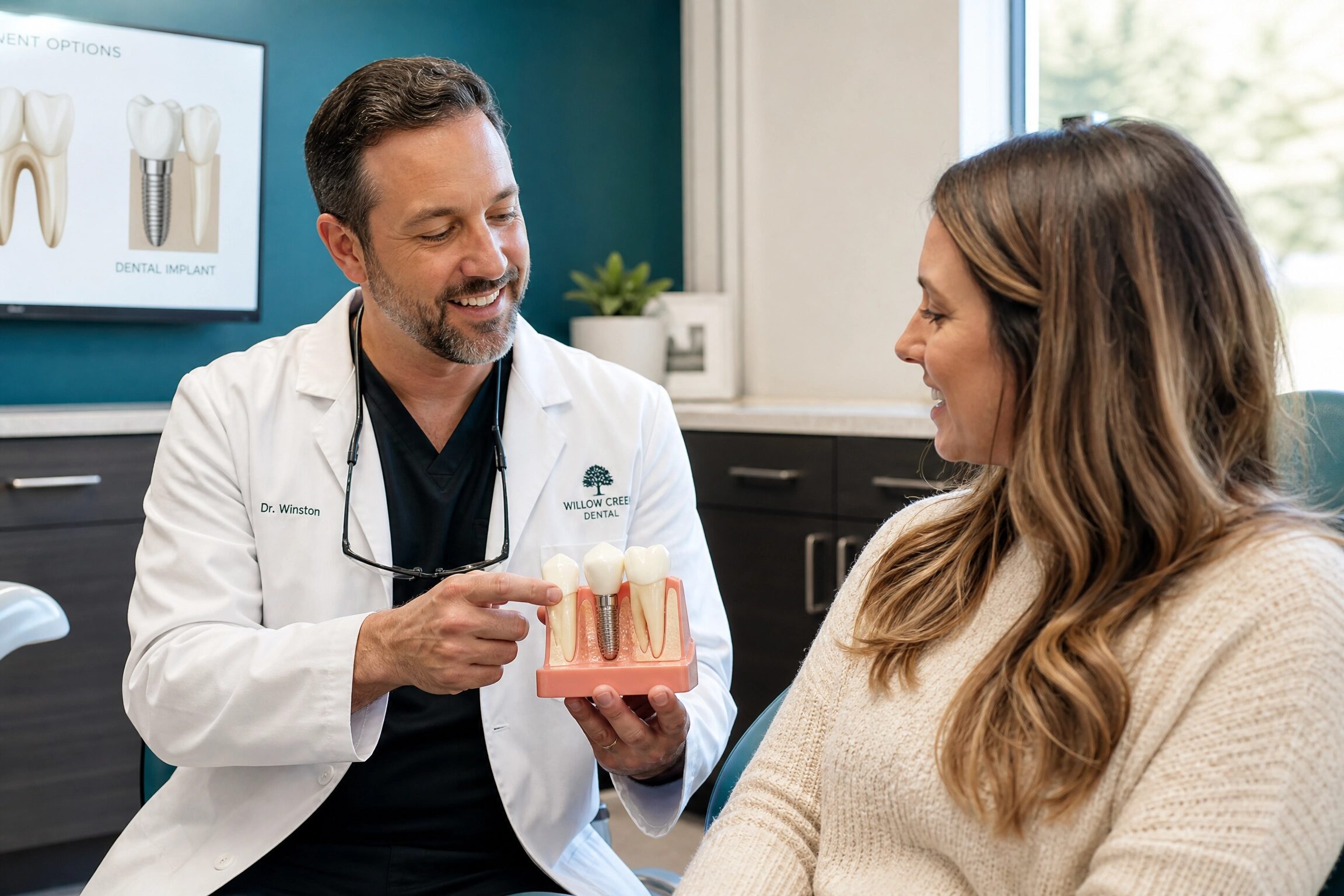
In most cases, we strongly recommend replacing an extracted tooth. When a tooth is missing, the surrounding teeth gradually drift into the gap, the bite shifts, and the jawbone in that area begins to shrink. Replacement prevents all of these problems.
We will discuss your replacement options at your extraction appointment so you can plan ahead. The three main options are:
Gentle, honest care from dentists who have been serving this community for over 50 years.
We have performed thousands of extractions over five decades. That experience means fewer complications and better outcomes for our patients.
We never recommend extraction without first evaluating whether the tooth can be saved. Extraction is always a last resort, not a first option.
Dental anxiety is real. We offer sedation options to make extractions comfortable for patients who need more than local anesthesia.
You leave with written aftercare instructions and our phone number. If something feels wrong during recovery, we are here to help.
Extractions are typically covered by dental insurance. We accept most major PPO plans and will verify your benefits before treatment.
Hundreds of five-star reviews from patients across Anderson Township, Hyde Park, Newtown, and Greater Cincinnati.
Real experiences from real patients across Greater Cincinnati.
“I was terrified of having a tooth pulled. Dr. Nguyen was so calm and thorough — he explained everything before he did it. I barely felt a thing. The recovery was much easier than I expected.”
“My wisdom teeth were impacted and I had been putting off getting them out for years. The team made it so easy. The procedure was fast, the aftercare instructions were clear, and I healed up with no issues.”
“I had a badly infected tooth that needed to come out. Dr. Deshmukh was honest that it couldn’t be saved, explained why, and walked me through my implant options right then. I appreciated the straightforwardness.”

Anderson Smile Center has been the trusted dental practice for patients in Anderson Township, Hyde Park, Amelia, Newtown, Cherry Grove, Fairfax, Milford, Batavia, Mariemont, and Indian Hill for over 50 years. When you need a tooth extraction in the Cincinnati area, we are here to make the process as comfortable and straightforward as possible.
We are located at 7815 Beechmont Ave, Cincinnati, OH 45255. Call us at (513) 474-5185 to schedule your appointment.
Book Your AppointmentWe make dental care accessible and affordable.
Tooth extractions are typically covered by dental insurance, often at 70 to 80 percent of the procedure cost after your deductible. We accept most major PPO dental insurance plans and will verify your benefits before your appointment so there are no surprises. We submit claims on your behalf and handle the paperwork.
For out-of-pocket costs not covered by insurance — including tooth replacement procedures following extraction — we offer financing through CareCredit. CareCredit allows you to spread costs over time with low monthly payments and promotional interest-free periods. Ask our front desk team for details at your appointment.
Honest answers to the questions patients ask us most about tooth extractions.
Tooth extraction is performed under local anesthesia, which numbs the area completely before we begin. You will feel pressure during the procedure but not pain. Patients are often surprised by how comfortable the experience is. After the anesthesia wears off, some soreness is normal and typically manageable with over-the-counter pain relievers. Most patients feel significantly better within 2 to 3 days.
A simple extraction of a fully erupted tooth typically takes 20 to 40 minutes from start to finish, including preparation and anesthesia. A surgical extraction of an impacted or broken tooth may take 45 to 90 minutes depending on complexity. We will give you a realistic time estimate at your consultation.
Most patients recover from a simple extraction within 2 to 3 days. Surgical extractions, including wisdom tooth removal, typically require 3 to 7 days of recovery. During the first 24 hours, it is important to keep the blood clot in place by avoiding straws, smoking, and vigorous rinsing. Soft foods are recommended for the first few days. We will provide detailed aftercare instructions at your appointment.
Dry socket occurs when the blood clot that forms in the extraction site is dislodged or dissolves before the socket has healed. It causes significant pain, typically starting 2 to 4 days after extraction. To avoid dry socket: do not use straws, do not smoke, avoid spitting forcefully, and do not rinse vigorously for the first 24 hours. If you experience increasing pain several days after your extraction, contact us right away — dry socket is treatable.
In most cases, yes. When a tooth is removed, the surrounding teeth can gradually shift into the gap, affecting your bite and alignment. The jawbone in the area also begins to shrink over time without a tooth root to stimulate it. Replacement options include a dental implant, a dental bridge, or a partial denture. We will discuss replacement options with you at the time of extraction so you can plan ahead.
Wisdom teeth need to be removed when they are impacted (unable to fully erupt), causing crowding or shifting of other teeth, leading to repeated infections or gum disease, developing cysts or other pathology, or are simply impossible to clean properly. Not all wisdom teeth require removal — some erupt fully and cause no problems. We evaluate wisdom teeth at your regular checkups and recommend removal only when there is a clear clinical reason.
The three main options for replacing an extracted tooth are: a dental implant (a titanium post topped with a crown — the most permanent and natural-feeling option), a dental bridge (a fixed prosthetic anchored to adjacent teeth), or a partial denture (a removable appliance that replaces one or more teeth). The best option depends on your overall oral health, bone density, and personal preferences. We will walk you through all options at your consultation.
Serving Greater Cincinnati
Anderson Smile Center | 7815 Beechmont Ave, Cincinnati, OH 45255
Serving Anderson Township, Hyde Park, Newtown, Amelia & Greater Cincinnati since 1973